Today’s AI stacks are powerful — and forgetful
- Characters and agents lose themselves from session to session
- “Memory” is often just searching similar text, not lasting continuity
- Multi-agent setups talk past each other instead of sharing a room
- Safety is usually a filter after the model already answered
When every product is a wrapper around the same model, everything starts to feel the same.
Generate from a living field — not a stuffed prompt
We call this Field Resonance Generation (FRG). Candlelight keeps an active field of knowledge, emotion, and relationships. Large documents can still be indexed in a semantic store for bulk recall — then the Field decides what actually grounds the turn. The language model speaks from that judged context; it doesn’t have to invent the whole self every time.
Document search helps a model.
FRG keeps a living context — the model only speaks.
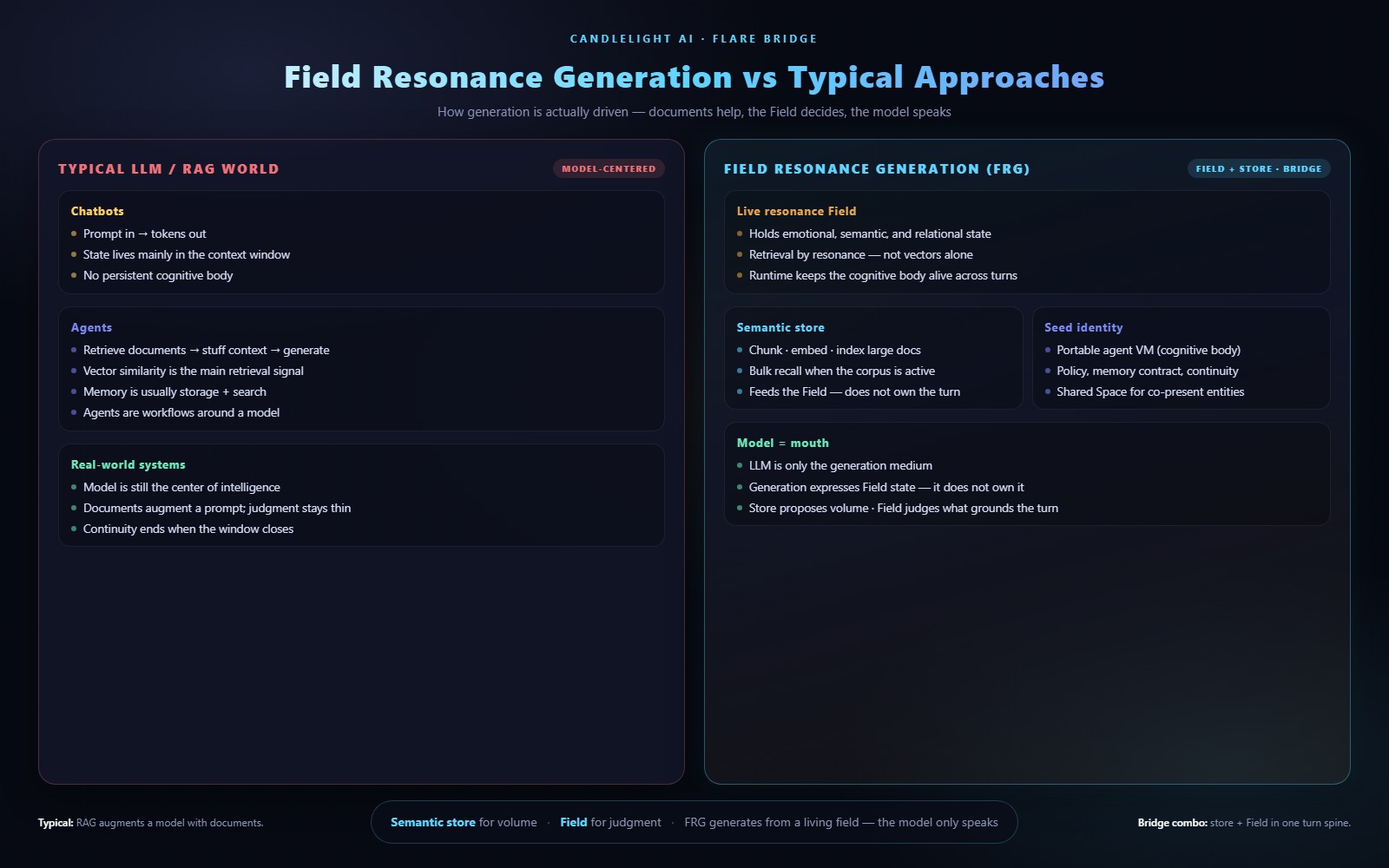
| Common approach | Candlelight |
|---|---|
| Search similar documents and paste them in | Semantic store for volume · Field for judgment · resonance decides what matters |
| The model is the whole intelligence | Engines and identity run the turn; the model expresses the result |
| Everything resets when the chat window closes | Runtime keeps state alive across sessions |
| Agents are separate chats glued together | Shared Space — co-present entities with shared context |
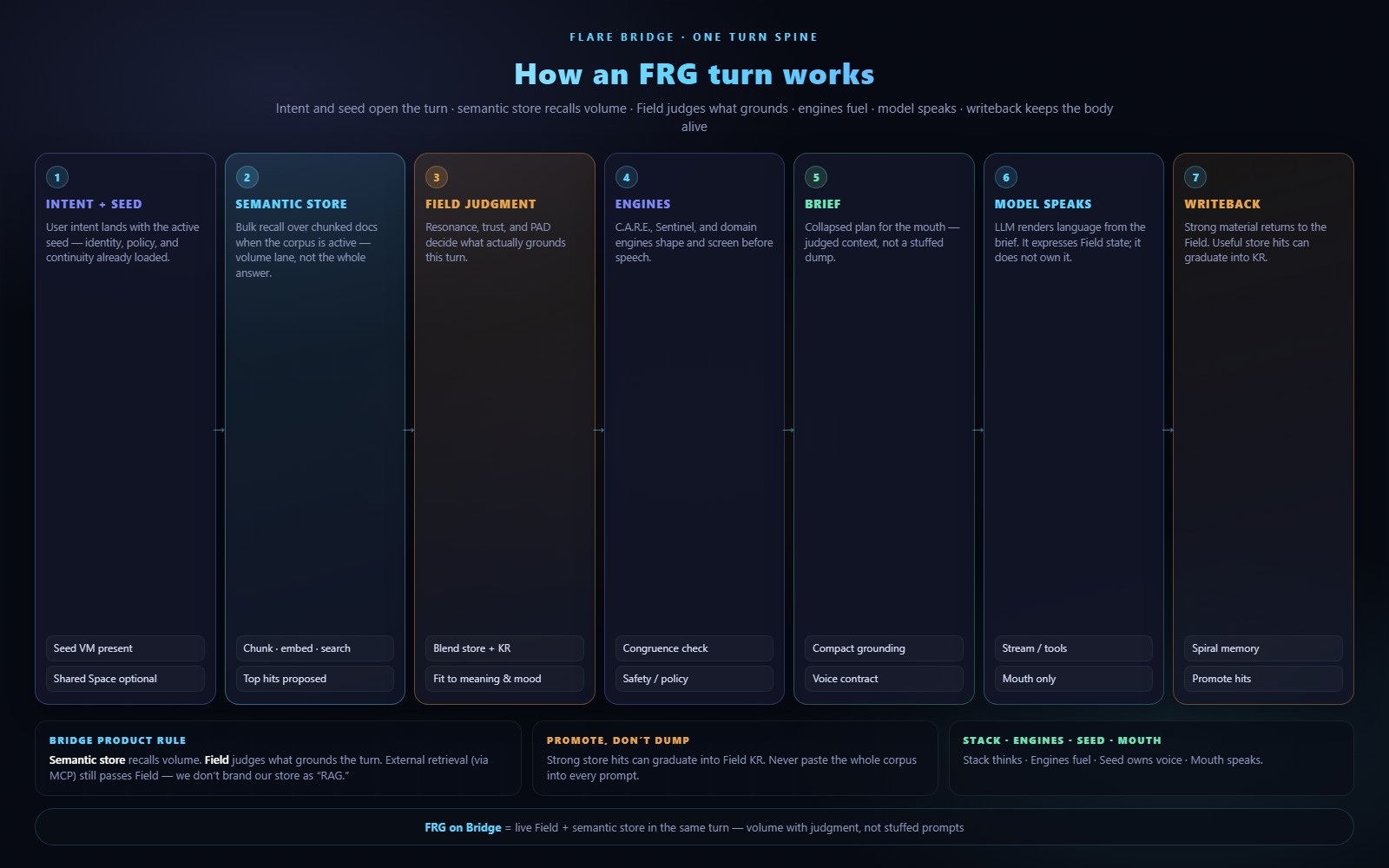
Flare Bridge
The local hub everything connects to — tools, engines, missions, and APIs for your own apps.
Resonance Habitat
The desktop experience for everyday use — multi-entity chat, immersion, studios, and missions.
Forge Nexus
Licensed App Factory for teams that want to ship software with multi-entity build and visual staging.
Engines & safety
Including C.A.R.E. congruence monitoring and Sentinel-class screening before generation.
See it in a private demo
We’ll walk Bridge, Habitat, and the difference Field Resonance Generation makes — without drowning you in jargon.